
4 hr
Cenote Scuba Diving Discovery
Take your first dive in Tulum's crystal-clear cenote waters with expert guidance and full gear.
Reserve
Hand-picked by our editors — only the best 5 discovery experiences from 18 reviewed.
Verified partners for every tour, free cancellation where available, and instant confirmation on every booking.
4 hr
Take your first dive in Tulum's crystal-clear cenote waters with expert guidance and full gear.
Reserve
4 hr
Descend into Mexico's largest cenote system for two guided scuba dives through crystalline caverns
Reserve
5 hr 30 min
Discover two worlds underwater in a single day—freshwater cenote among mangroves, then vibrant coral reef.
ReservePrices from verified partners. Availability updates in real time at checkout. Free cancellation policies apply where shown.
The landmarks, rooms, and views travelers on this tour remember — all visible on a single visit.
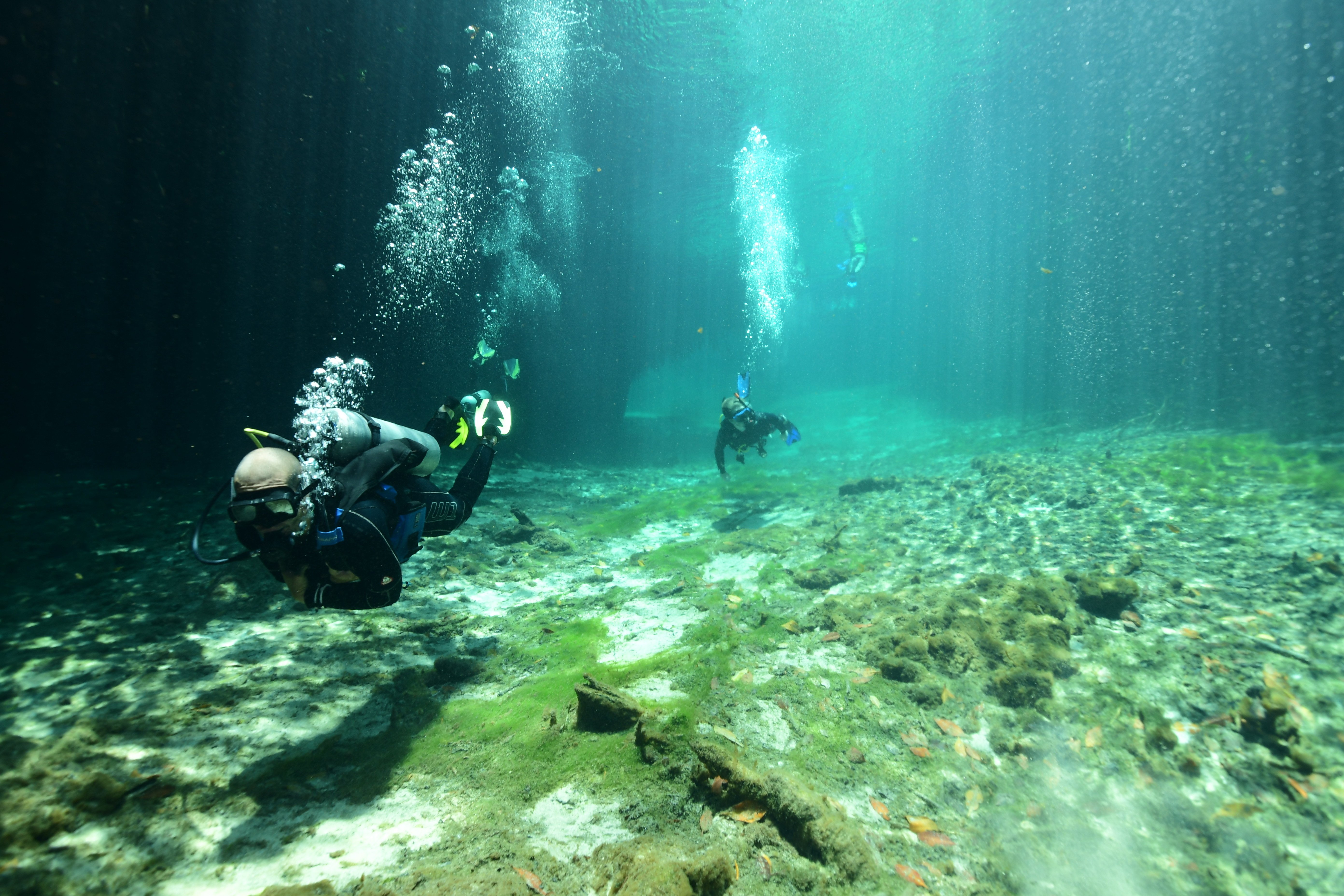
Experience limestone formations and crystal-clear freshwater unique to the region. Water temperatures remain a constant 25°C throughout the year.
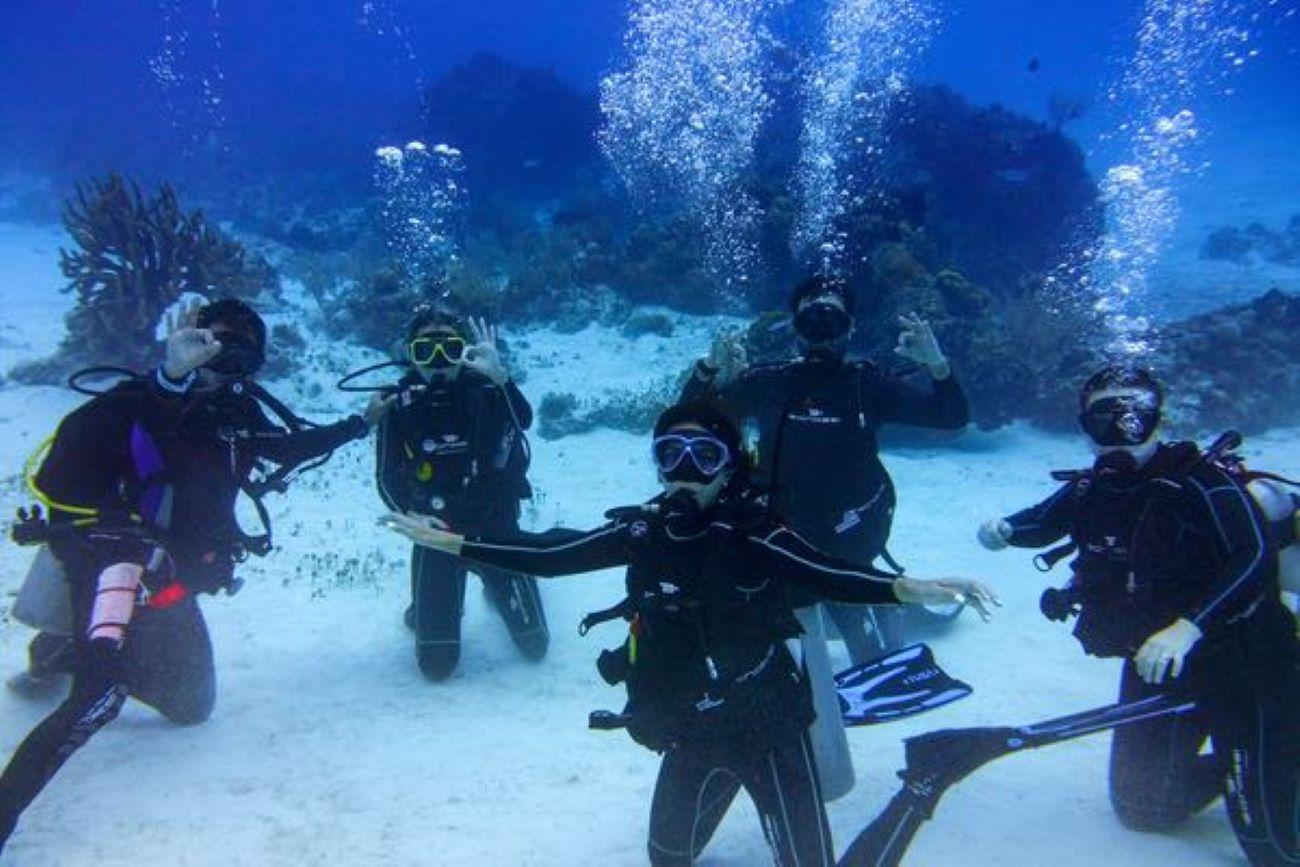
Beginners practice essential buoyancy skills in calm, shallow sections. This area is designed to build confidence before deeper exploration.
Observe endemic species such as freshwater turtles and small tropical fish. Knowledgeable guides identify local fauna during the dive.
Marvel at ancient stalactites and stalagmites formed over thousands of years. These features are strictly protected to ensure their preservation.
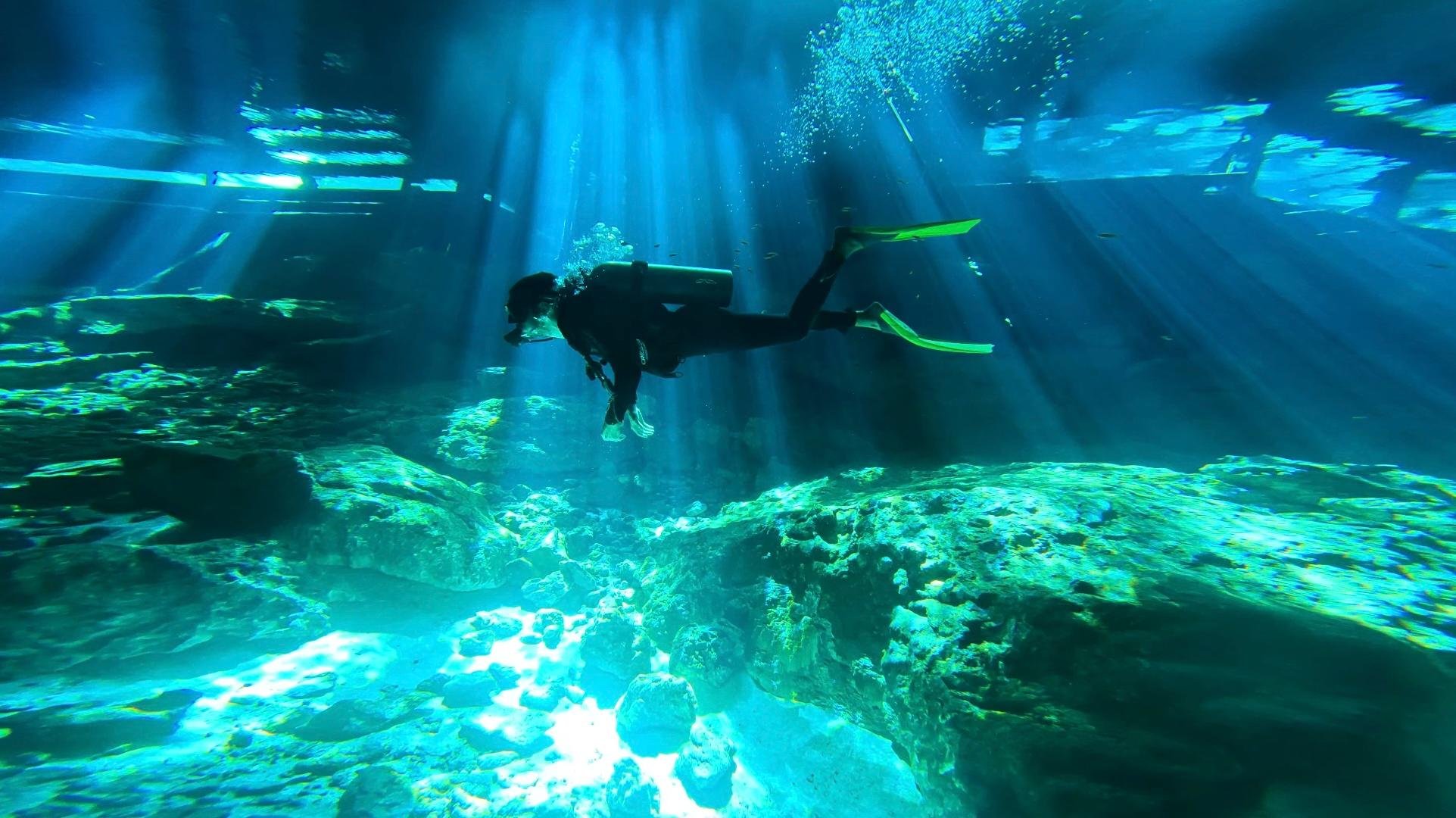
Witness the sun beams piercing through the water surface at select entry points. This optical phenomenon provides a perfect setting for photography.
They complement each other; most visitors who do both call the reef the more thrilling option for marine biodiversity, while cenotes provide a unique calm environment. Securing scuba diving tulum beginners tickets allows you to explore these distinct underwater landscapes.
| Feature | Top pick Tulum Cenotes | Caribbean Reef |
|---|---|---|
Environment |
Freshwater limestone cavern | Open salt-water ocean |
Visibility |
High, constant clarity | Varies by weather conditions |
Currents |
Minimal to none | Variable surface and bottom currents |
Marine Life |
Limited, specialized species | Abundant tropical fish and coral |
Skill Requirements |
Controlled buoyancy recommended | Basic open water skills |
Accessibility |
Carretera Federal 307 access | Boat required for reef entry |
| See tickets → |
Verdict: Choose the cenotes for their stable conditions and light-filled caverns, or select scuba diving tulum beginners tours if you prefer the expansive, living ecosystems of the open sea.
Choose your ticket, select your date, and reserve in under two minutes. Secure checkout handled by our verified partner.
Instant confirmation by email, with a mobile voucher you can save offline. No printing, no queuing at a collection desk.
Arrive at the entrance, show your voucher on your phone, and walk in. Most tickets include priority or skip-the-line access.
Practical details for your visit straight from our verified partners — hours, access, rules, and how to get there.
Carretera Federal 307
Look for the clearly marked signage
Follow Highway 307 south toward Tulum.
Take a Colectivo heading toward Tulum Centro.
Wear swimwear and light clothing suitable for the tropical climate. A change of clothes for after your scuba diving tulum beginners experience is recommended.
Secure lockers are not provided at most cenote entries. Keep valuables to a minimum and leave essential items in your vehicle or hotel.
Underwater cameras are allowed during your scuba diving tulum beginners session. Please ensure all equipment is secured to avoid damaging fragile cave ecosystems.
The natural environment for scuba diving tulum beginners often involves uneven paths and stairs. Guests must be able to carry gear over short distances.
Children aged 10 and up can participate in introductory scuba diving tulum beginners programs. Junior certifications are available through most local operators.
No food or drink is permitted near the water to protect the ecosystem. Facilities at the entry may offer basic refreshments.
Best time to go, insider tips, nearby landmarks, and the cancellation fine print — flip through to skim what matters to you.
How crowds, weather, and events shift across the year.
March to May offers the clearest water visibility. Temperatures average 28°C during these months.
June to August features warm air but occasional rain showers. Morning sessions are critical for visibility.
September to November can be humid with variable water conditions. Check local weather reports regularly.
December to February provides cooler air temperatures. Cenote water remains a constant 25°C year-round.
Small details that turn a good visit into a great one.
Use rash guards instead of chemicals to protect cenote water. Chemical residues can harm the fragile cave environment.
Follow the best arrival window of 08:00–10:00 to avoid crowds. This ensures clearer water visibility for your dive.
Ensure you are comfortable swimming in open water before your scuba diving tulum beginners tour. Training builds confidence for beginners.
Pay the 350 MXN conservation fee promptly upon arrival. This supports the ongoing preservation of the local ecosystem.
Most scuba diving tulum beginners tours offer English and Spanish instruction. Request your preference during booking.
Non-bookable sights within a short walk — free to visit, easy to pair.
Coastal archaeological site overlooking the Caribbean Sea.
White sand beach ideal for relaxing post-dive.
Popular limestone cavern system for swimming.
Protected area featuring diverse local flora.
Flexible, no hidden fees.
Cancellations made 24 hours prior are eligible for a full refund. The 350 MXN conservation fee is typically non-refundable as it covers mandatory environmental taxes.
Hand-picked options within walking distance — pick a district for vibe, or a specific hotel for convenience.
Beachfront resorts located near the coast.
Central area with access to local shops.
Modern residential area with short-term rentals.
The Mesoamerican Barrier Reef runs 1,000 kilometres from the northern tip of the Yucatán to Honduras, making it the second-longest reef system on Earth. Tulum sits at the midpoint of this submerged spine, where the Caribbean shelf drops away in stages — shallow coral gardens at 8 to 12 metres, then sand channels and swim-throughs that funnel schools of sergeant majors and blue tangs through natural corridors. Fifteen kilometres inland, the Sac Actun cave system holds 347 kilometres of surveyed underwater passages, the longest network of flooded caverns in the world. Cenotes — sinkholes fed by the peninsula's underground rivers — offer visibility that routinely exceeds 50 metres, a clarity that turns limestone walls and root tangles into high-definition tableaux. Scuba diving tulum beginners programs rely on this dual geography. Discovery dives in cenotes like Dos Ojos and Pit place first-time divers in shallow cavern zones, where depth stays between 5 and 10 metres and natural light penetrates from overhead openings. The halocline — the boundary layer where fresh and salt water meet — refracts light into wavering bands, a phenomenon visible only in coastal cenote systems. Reef dives along Tulum's coast target sites like Barracuda and Chun-Zumbul, where maximum depth stays below 12 metres and current is minimal. Both environments allow instructors to conduct confined-water skills in open settings, a training model that compresses the learning curve while maintaining overhead access to the surface. The region's dive infrastructure expanded after 2010, when cave-diving certification agencies began separating cavern courses from full cave training. Cavern zones — defined as areas within 60 metres of an entrance and continuous daylight — opened cenote diving to recreational students and discovery participants. Tulum's instructor base now exceeds 200 PADI and SSI professionals, many holding additional cave or cavern specialties. Equipment is standardized: 12-litre aluminium tanks, 5mm wetsuits for the cenotes' 25°C thermocline, and buoyancy compensators with integrated weight systems. Rental inventories turn over every two to three seasons, keeping regulators and dive computers within manufacturer service windows. Cenote access requires a 350-peso conservation fee per person, collected at park entrances along Highway 307. Reef sites within the Tulum National Park marine reserve carry no additional entry cost beyond standard dive operator fees. Most beginner dive packages include round-trip transport from Tulum's hotel zone, a 20 to 40-minute drive depending on cenote location. Peak visibility in both cenotes and reef sites occurs between May and September, when rainfall is lower and particulate suspension drops. Water temperature holds steady year-round, ranging from 26°C in winter months to 29°C in late summer.
"The halocline refracts light into wavering bands, a phenomenon visible only in coastal cenote systems."
A step-by-step walkthrough of the visit — what you'll see, how long each stage takes, and the details that matter.
You meet your instructor at 8:00 AM in Tulum's hotel zone, where a van holds fins, masks, and wetsuit racks sorted by size. The drive to Dos Ojos takes 35 minutes along Highway 307, passing jungle canopy and hand-painted cenote signs. At the entrance, you pay the 350-peso conservation fee and descend a wooden staircase to a limestone platform where the cenote opens into twin pools of turquoise water. Your instructor fits your buoyancy vest and runs through regulator clearing, mask flooding, and hand signals — ten minutes of dry practice before you wade into the shallows. The water is 25°C, cool enough to justify the wetsuit but warm enough to forget it once you descend. At 5 metres, you kneel on a sandy patch and practice controlled breathing while your instructor watches your gauge console. Visibility stretches 50 metres in every direction, turning the cavern into a cathedral of light columns and root tendrils. You follow the guideline deeper, finning past stalactites and over a halocline that blurs your vision for three seconds before you pass through. At 10 metres, you hover near a breakdown pile of collapsed limestone and watch your bubbles spiral toward the surface. The dive lasts 35 minutes. Back on the platform, you shed your gear and rinse in fresh water, already planning the reef dive that follows in the afternoon.
The site operates from 08:00–17:00 daily.
Yes, there is a 350 MXN conservation fee, per person, required for entry.
The best arrival window is 08:00–10:00 to avoid crowds and enjoy clearer water visibility.
Participants must generally be at least 10 years old to begin introductory scuba programs.
Operators provide all necessary gear for the scuba diving tulum beginners tour.
Wear swimwear and bring a change of clothes for after your visit.
Parking is available at the address: Carretera Federal 307, Tulum, Quintana Roo, Mexico.
You can secure scuba diving tulum beginners tickets through the provided product grid.
Yes, underwater cameras are allowed, provided they do not disrupt the environment.